Cédric Beaume
Applied Mathematician
You are in Beaumian Motion > My part in a murder
Contact
c.m.l.beaume AT leeds.ac.uk
Dr. Cédric Beaume
School of Mathematics
University of Leeds
Leeds, LS2 9JT (UK)

Languages


My part in a murder
Murder: a flock of crows (Merriam-Webster).
The first one saw you leave your home. The second one watched you get on the train. Another observed you at work. You did not notice them. In the summer of 2025, I finally did. I helped a jackdaw. Later, I offered a peanut. Then meat. What began as a small act of interspecies kindness made me notice a society above our streets, structured, opportunistic and far more aware of us than we are of it. I thought I was just feeding a bird...
Chapter 1: The trigger
11/06/25: Jackdaw daddy
A fledgling jackdaw was trapped in a neighbor's front yard with no way out except through flight. Despite the many calls of encouragement from its parents, it spent the entire afternoon on the ground and its discouragement was obvious. I went to help and, with a bit of patience, managed to make it climb on my arm. Its grip was not very tight but I was surprised by the warmth of its feet against my skin. Thanks to its new-found elevation, it became curious about its surroundings and expressed itself in a way that felt familiar to me. When Kimie, my hand-raised cockatiel, was curious about something, she stretched her neck toward it, tightened her grip on my finger or arm and twisted it accordingly. This became standard non-verbal communication between us. As the jackdaw acted similarly, my response was prompt: I moved my arm in the direction of its interest. This coordination seemed to build its confidence. Its inhibition progressively faded and it regained interest in taking flight. It stretched upward. I responded by moving my arm upward. Then it relaxed and I moved my arm downward. After a small hesitation, it started again. We went through two similar cycles, amplifying the motion during the second one. On the third cycle, I threw my arm and it jumped off. The jackdaw's awkward flight covered a few tens of meters and it perched against a first floor window across the street. Success! I helped a jackdaw take its first flight.
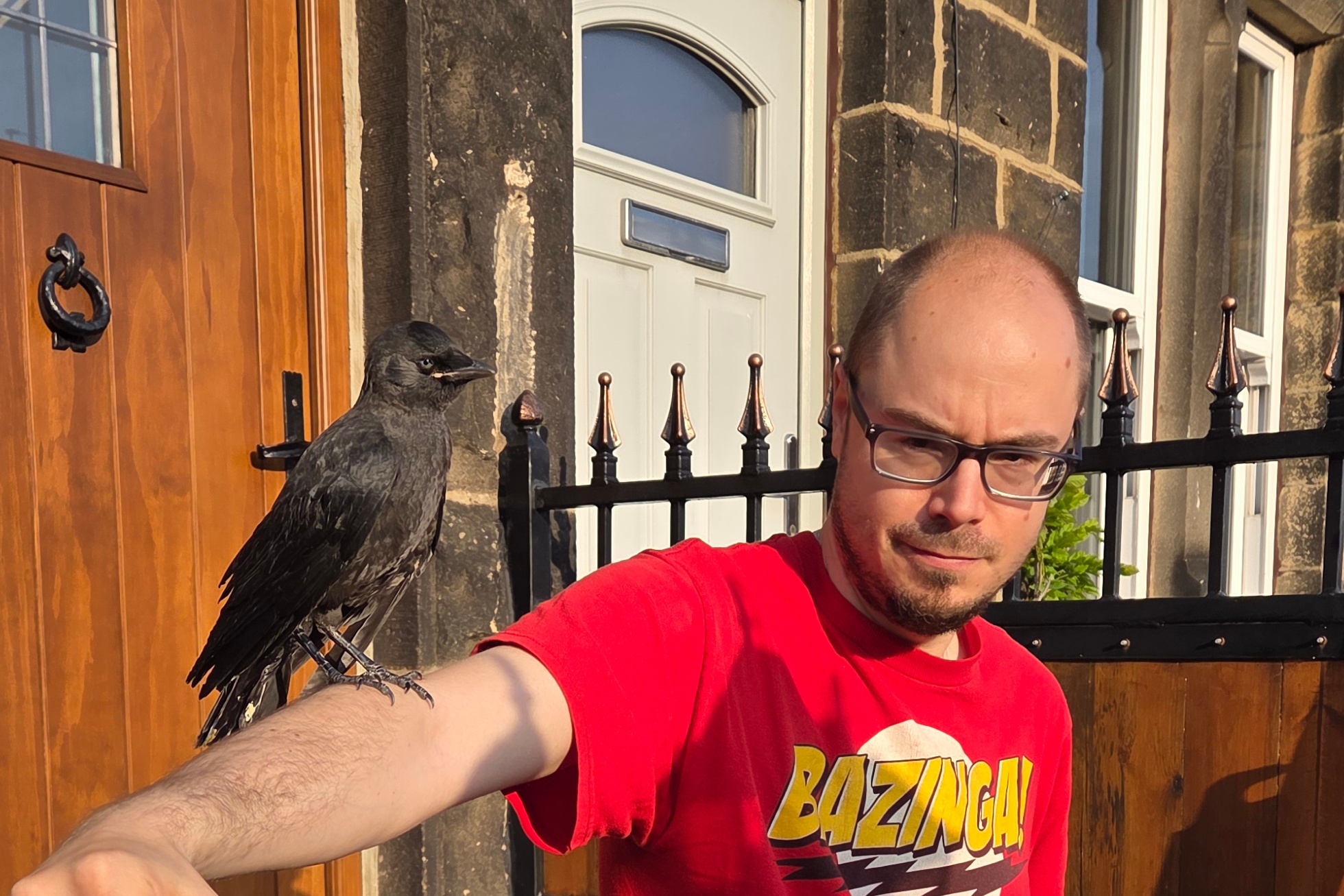
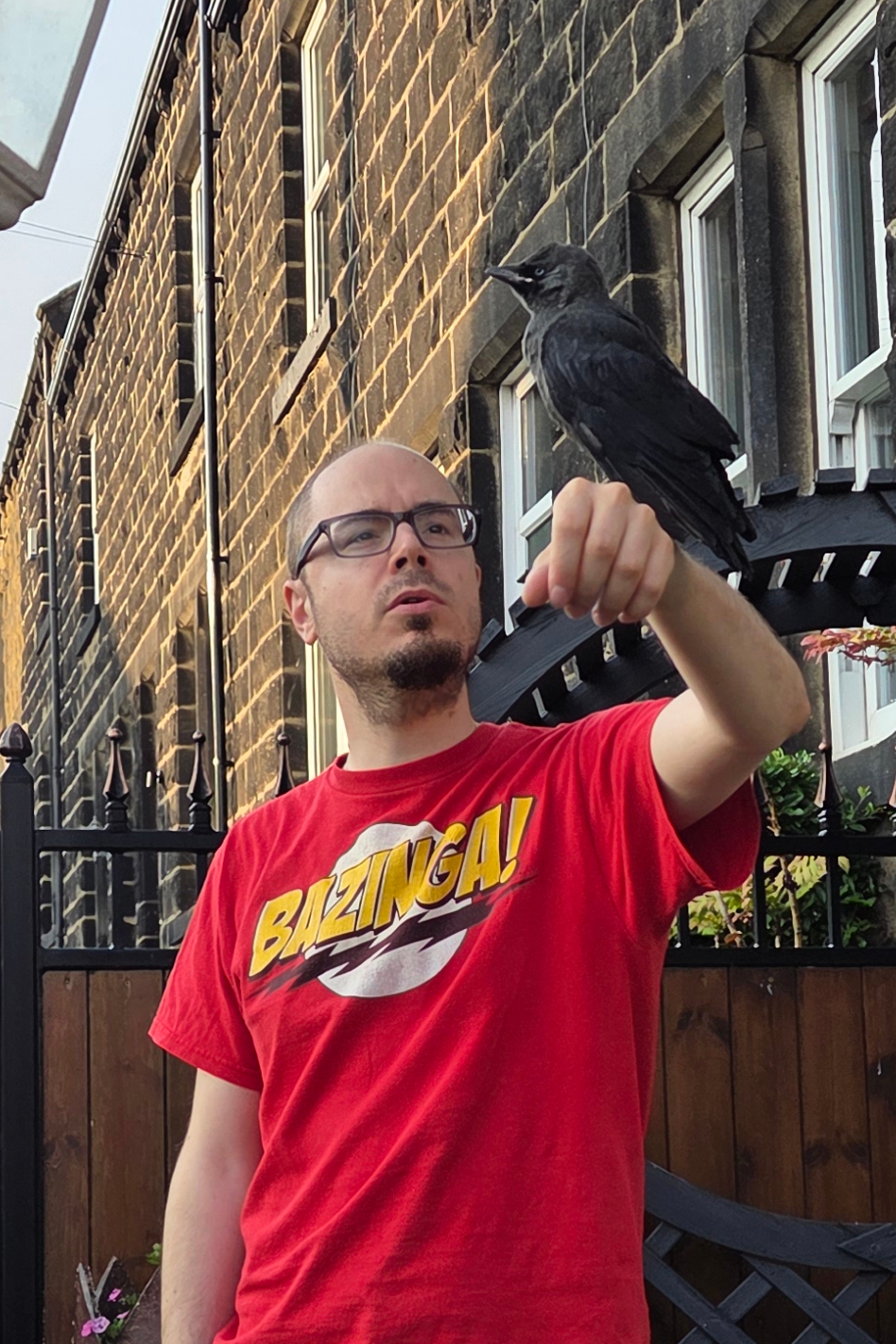
Playing jackdaw daddy (doh dah dee, doh dah dee doo 🎶).
Chapter 2: Meeting corvids
13/06/25: Beginner's luck
On a whim, after reading a number of online accounts claiming that feeding wild corvids peanuts is easy and rewarding, I bought a bag of redskin peanuts. Outside the grocery store, I stumbled upon a crow with the attitude of a sidewalk sovereign. I grabbed the peanuts, scattered three on the ground before me and backed off against the wall. Without hesitation, the corvid ate the first peanut, then grabbed the other two in its beak and flew away with them. One crow fed, one human pleased.
19/06/25: Peanut patrol
After two successful encounters last week, I decided to take my corvid adventures a step further. As the week progressed, my initial errand turned into a well-defined objective: I wanted to befriend a crow. But first, I needed to get their attention. So, I walked around the neighborhood a few times a day with a pouch full of delicious peanuts and, every time I spotted a crow or a jackdaw, I followed a careful (if slightly ridiculous) protocol:
1. walk to a place near the corvid's perch
2. grab two peanuts–I wanted to appear generous
3. display them while clicking my tongue three times–an auditory signature should improve recognizability and I did not want to imitate a bird call to avoid being misunderstood by the corvids (my neighbors already know I am quirky)
4. place them on the ground in front of me
5. walk away as far as I could while still within sight of the action
6. observe for a few minutes
This did not give me much success and I had to go back to pick up most of my "droppings". I only managed to feed three corvids despite hours of walking and stalking. In fact, the few birds I saw seemed indifferent to my gifts. Were they fully satiated? Or too suspicious to accept food? Did I act inappropriately to them?
20/06/25: It's a crow!
On Thursday evening, I had a strange idea: scramble an egg and leave it on my driveway for breakfast. I did exactly that the following morning, before even preparing my own breakfast. As I was barely back indoors, a crow landed and ate the egg. Breakthrough! I find it remarkable that the crow could act so quickly: it only took me seconds to place the egg on my driveway and the neighborhood was bustling with commuters. In hindsight, I believe that my client had been perched on the top of a very tall tree quite some distance away but with my driveway in sight. It might have seen me tossing peanuts in the neighborhood during the past few days and awarded me the "interesting human" badge. Who knows, I might, some day, drop tastier snacks.
Later that morning, it perched on a low branch across the street, facing my window, and made a loud structured call. It was irresistible. I dropped work, turned to face it, and felt immediately locked in, as if it penetrated my soul. Was it the crow's way to thank me? Was it telling its friends that it located a source of food to which it pointed? I wish I knew but, at that moment, I realized that I was being observed and that this crow had my address. It was my turn to be opportunistic. I wanted to keep it around to maximize our interactions. For the time being, my driveway would be an abundant source of corvid food. On the menu today: cooked ground beef leftovers. Unfortunately, during lunchtime, two magpies saw fit to down the first serving. They returned once more that afternoon but did not prevent my star client—the crow I had been trying to befriend—from enjoying another human-made meal. It even brought a fellow crow, who remained on the tree. I assume they are a couple.
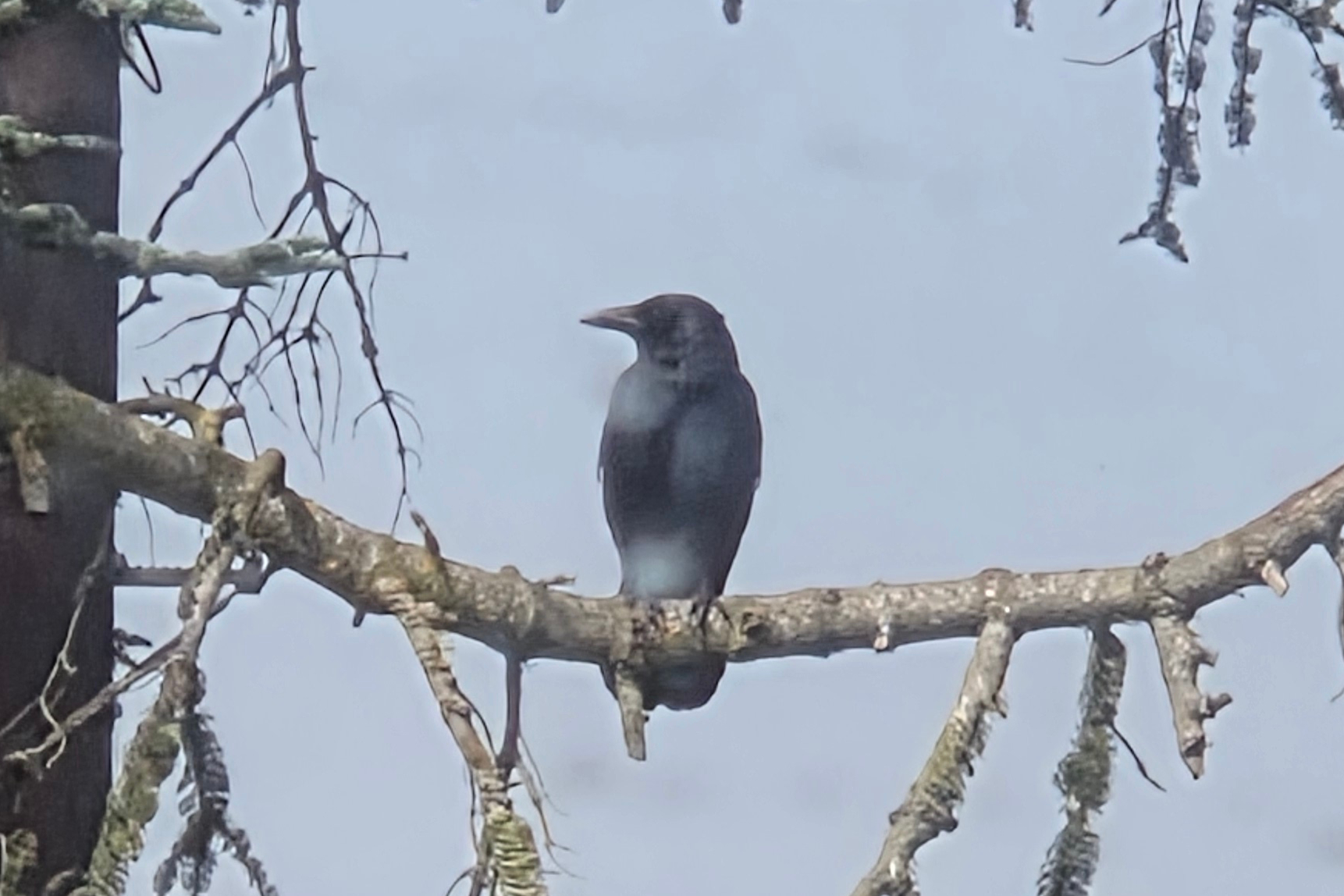
Moments after the crow's eerie call to my window. I was shaken. It likely was not.
Chapter 3: Entering crow world
21/06/25: Whose restaurant?
My efforts to turn my driveway into a permanent restaurant for crows worked. A crow spent considerable time stationed on a tall tree across the street and was sporadically joined by two others whose behavior suggested recent fledging: they requested food from the elder by leaning forward, beak wide open, shaking their tails and producing a sound that I can only describe as a loud mixture of a macaw and a toad but in a creepy sort of way. I now had a resident crow family.
Unfortunately, during the morning, a gang of four magpies violently assaulted my avian restaurant, unappreciatively swallowing scrambled egg and ground beef. They remained in the neighborhood all afternoon and even reoffended. In the evening, one of them approached stealthily as a crow was trying to decide if the food was safe. The crow reacted promptly by chasing it away. It looked like an innocuous event but I am sure something took place that only birds can understand. From that moment on, no magpie dared to approach my crow.
28/06/25: Designing the menu
Last Sunday, I set up an experiment to identify the best treat for my crows. Several times a day, whenever they appeared or called, I put out small portions of three different food items and recorded the order in which they ate them. This was not my first attempt. Fifteen years ago, Kimie was my test subject and she made a point of eating her seeds in a random order, which defeated my purpose entirely. As any good French bird, however, she had a soft spot for the crusty end of baguettes. Much to my surprise, crows methodically finished one food item before tackling another and showed great predictability. Here are the results, starting with their preferred snack:
1 (tie). Cashew nuts
1 (tie). Walnuts
3. Cat food (Purina Go Cat: Duck and Chicken)
4. Hazelnuts
5. Roasted monkey nuts
6. Redskin peanuts—the resident woodpigeon is grateful
I also tested rarer food items. Some of them were absolute treats (raw pork fat, raw lardons and cooked ground beef). These scraps were always chosen first but are either impractical or unhealthy. Lastly, scrambled eggs obtained unclear results and require further study.
The crow that came to my property on 20 June 2025 was easy to identify. He had gray-colored patches on both wings that seemed to result from a symmetrical gap in his feathers, exposing his down. I have been wondering about their cause. I assumed he was a male given his dominant behavior. During most of the experiment, he was the only diner and had a clear preference for walnuts. The last couple of days of the experiment saw another crow at the table, presumably his mate. She, on the other hand, was partial to cashew nuts. This is why walnuts and cashew nuts share the first place above. Last but not least, the fact that my crows deliberately left the redskin peanuts explains my lack of success during my mid-June neighborhood walks. My crows, as it turns out, are fancy.
So, from now on, I will have a cupboard full of cashew nuts, walnuts and cat food. I am still unsure what to do with hazelnuts and roasted monkey nuts but redskin peanuts will be going to the bird feeder frequented by house sparrows, dunnocks, blue tits and coal tits.
20/07/25: Garage diplomacy
How would you describe a crow? The first words that come to mind for most people are "black" and "loud". After a good month of study, my answer would rather be "fascinating" and "frustratingly skittish". Consider their matte metallic feeding tray: they only "accidentally" approached it during the first couple of days and it took the better part of a week before they started displaying any casual behavior near it. A month later, they still occasionally startle-jump after grabbing food.
My local crows do not tolerate being looked at when they are on the ground. They overreact theatrically when they feel observed, ceasing whatever they are doing to adopt a gauging stance, hop away or simply take flight. Not only the human gaze triggers this behavior, but also camera lenses. Now you know why I cannot take a decent quality photo of these birds. To get them used to me, I decided to remain within sight when they eat. I set up a seat and a table in my garage (more eye-rolling from my neighbors), approximately 6m away and downslope from the feeding tray. During my first garage session, on 27 June 2025, a crow landed and walked around. It left the food untouched. A couple of days later, a crow daringly grabbed a single cashew nut, then left without returning. On 2 July 2025, however, a crow landed and cawed resoundingly in my direction before leaving with a beakful of treats. He returned a few times to empty the tray despite my presence. To this day, my crows are still easily frightened but they will feed in my presence, as long as I do not move or stare at them.
Yearling crow startle-jumping after being surprised by the action of its own weight on the tray. |
02/08/25: The hard-boiled egg
After noticing changes in feeding patterns, I decided to run the snack ranking experiment again. I was not disappointed:
1. Cat food (Purina Go Cat: Duck and Chicken)
2. Cashew nuts
3 (tie). Roasted monkey nuts
3 (tie). Walnuts
3 (tie). Almonds
6. Hazelnuts—they were sometimes left behind, uneaten
In addition, salmon skin was the top pick every time it was provided. Carrion crows, after all, live up to their name. The differences in ranking compared to the 28/06/25 experiment are likely due to feeding different crows. In the early days of the previous experiment, walnuts topped the chart. It could be the male's top pick as he was then feeding the family. Later, a second crow joined him and cashew nuts became favored. I assume this is the female's favorite snack as the fledglings were still dependent on adults to feed. In the current experiment, I may have been feeding an additional two, maybe three, younglings. The results may now reflect their tastes, explaining the rise of cat food.
Last week, I challenged my crows with a hard-boiled chicken egg. The result was entertaining. Barely a few minutes after setting up the egg on the feeding tray, a yearling crow appeared. It was clearly its first encounter with a hard-boiled egg (see video below). It first studied the egg, then attempted to break it, albeit with a dubious technique. Once cracked, the young crow enjoyed its meal (despite struggling to hold the egg with its foot) before ultimately deciding to fly away with the uneaten half of the egg.
First encounter of a yearling crow with a hard-boiled chicken egg. |
06/08/25: Optimized squirrels
One difficulty I have encountered is the presence of unabashed gray squirrels. By now, they have learned that I am a food dispenser and patiently wait in the hedge across the street for me to bring the feeding tray out. They have optimized their behavior to the point that I no longer have time to get back indoors before they reach the tray. They have also adjusted their safe distance: when I am more than 3m away, they mind their own business (i.e., eating crow food) but as soon as I get any closer, they make a dash to grab one last nut before graciously hopping away. Consequently, I can no longer scare them away. To mitigate this nuisance, I bought a feeding tray mounted on a 60cm pole planted in the lawn. The idea is simple: unappealing treats (fish skin, cat food, eggs, etc.) on the ground tray; nuts on the raised tray, out of squirrel reach. So far, I have observed squirrels smelling the nuts from below the tray but none of them dared jump on it. It is not a win yet, though. The crows are afraid of the raised tray.
27/08/25: Securing the perimeter
I have been feeding a crow family of four every day since 20 June. They generally came twice a day, feeding eagerly in the morning between 9am and 11am and more casually in the afternoon between 3pm and 6pm. In the morning of 2 August, as they were perched unusually close to my house, one of them cawed and a loud echo resonated from one of my surveillance cameras—I was carelessly scrolling through settings and must have had it on speaker. The ominous feedback likely startled them as they left before feeding and did not return for days. Or perhaps it was simple neophobia toward the new raised feeding tray.
In the absence of crows, the magpies returned, this time joined by jackdaws. Another crow family also visited, but only sporadically. Its five members were scared of the metallic feeding tray and their younglings were still persistently begging for food, so it seemed a month behind in development compared to my "resident" crow family. Their approach was methodical. First, a single crow landed and walked purposefully everywhere, examining everything with skepticism. The establishment of a perimeter could take a couple of minutes before the crow in command "allowed" the others to land and feed. If a car or a pedestrian passed by, all flew away except the overzealous commander who would move sideways only slightly before methodically resuming its patrol while the others waited in the trees.
My resident crows returned on 16 August, led by a different bird. I recognized it as one of the younglings thanks to its brown hood plumage and to its peculiar behavioral quirk: it likes to walk on the metallic feeding tray while every other bird is scared of it. It developed two partly white primary feathers on its left wing; I have found myself calling it "Alba". The other youngling sometimes joined. It had a thinner head, frequently landed on the gutter above my office and displayed the intriguing propensity to walk on the slanted wall of my outdoor staircase. During its absence, it seemed to have developed gourmet tastes: it likes to drop food into water and periodically check its softness with its beak. Quite rarely, the parents joined them for snacks.
All of this raised the following questions:
- Why would the resident crows suddenly stop visiting only to return about two weeks later? Crow conference? Summer holiday?
- What caused the change in the dominant crow from one of the parents to one of the younglings? Is it possible that the family split their territory and gave some to their younglings? Could this even happen when they are so young (I suspect they are yearlings)?
- What could explain the visits of the military crow family while the residents are away? Could my property be on the edge of two crow territories and the second family is a neighbor?
I did not manage to find anything in the scientific literature that clearly explains what happened, but most of it focuses on the American crow rather than the carrion crow, which is my local species.
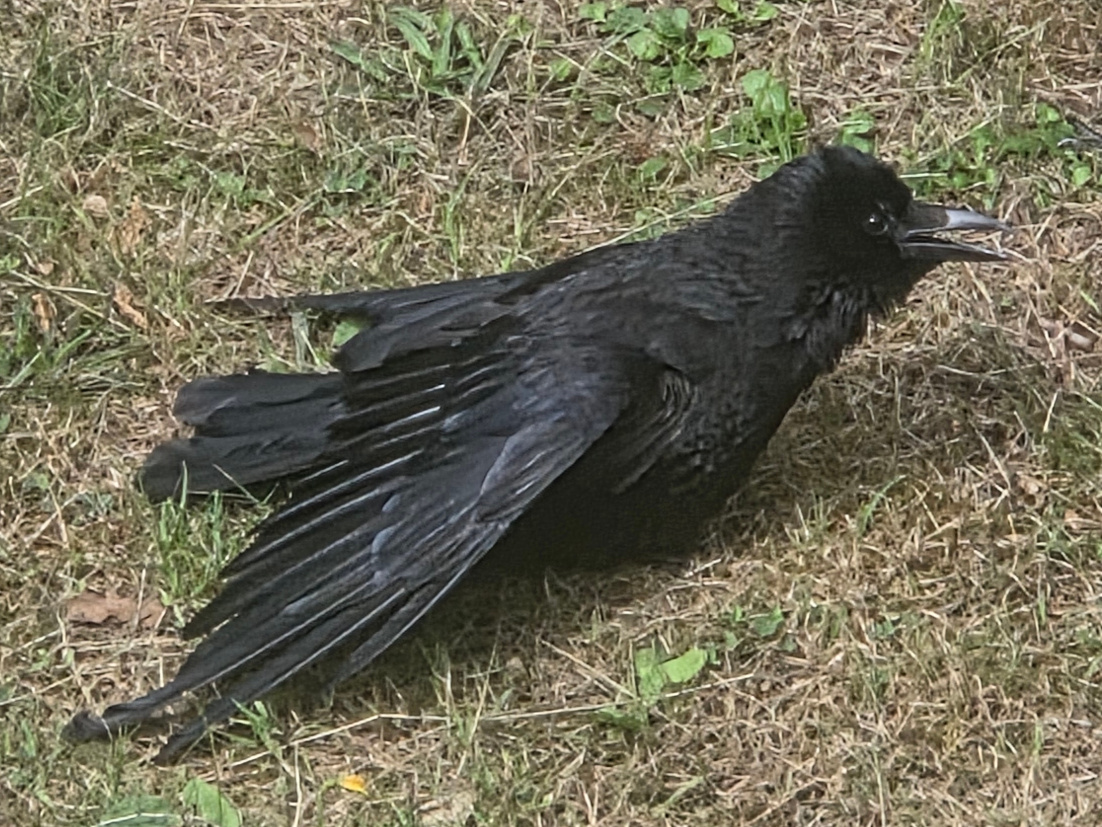
Adult crow sunning on the lawn (Yorkshire birds have the enviable ability to see the sun through the clouds!)
22/02/26: Friend of the flock?
Monday: Upon leaving home, I made my usual 3-click tongue sound to let the crow residents know that I was out. Not a black feather in sight. As I walked down the street, I found the urge to turn around and scan trees and roofs irresistible. None of my checks were successful. Finally, at the edge of their territory, I turned around one last time. They were there! A pair of crows had silently flown in and perched on top of the nearest chimney, 15m behind me. They were seeing me out of their territory without alerting me of their presence. I find it difficult not to anthropomorphize their behavior.
Tuesday: This time, the crows were in the trees when I left home and 3 of them escorted me down the street, their services paid in cashew nuts. At the edge of their territory, one of them launched into flight from behind me, zoomed past and turned tightly around me at a distance of about 3m and at chest height. It then broke his loop to perch on a nearby roof. A second crow followed the same trajectory closely. I could not help but wonder what they were up to. Were they trying to make me stay in their territory? Testing how close they dared to fly? Or was this their way of introducing me to another crow? About a minute later and as I was walking on the parallel main street (perhaps still part of their territory), a crow took advantage of the lack of traffic to fly past me very slowly at head height. Another similar fly-by took place on the nearby train station platform.
Wednesday: Around lunchtime, as the crows were perched on the tall trees in front of my home office, I decided to run an experiment. I went out and walked the opposite way from my normal commute, aiming for the neighborhood park. Three cashew nuts persuaded the crows to follow me. They did better. As I approached the park entrance, they disappeared. I found them waiting for me perched on trees inside the park. There, they repeatedly flew around me and seemed to react in a playful way when I tossed a nut in the air: they would alter their course to try to catch it before it fell on the ground. Their persistence in flying so close made me suspect that they were training me to toss nuts for them to catch mid-flight. It is not far-fetched, after all, I have seen them attempt to catch falling tree leaves a few months earlier. Unfortunately, the British weather got the best of me and I did not show much promise as a crow quarterback.
Saturday: A few rainless hours allowed me to go to the park with the crows again. Out of 4 crows, one of them remained in the trees and took the role of the sentinel while the others freely interacted with me. Regrettably, we did not repeat our throwing game but some interesting dynamics nonetheless developed. They must have realized that my slow walk was usually directed toward them. Instead of scattering as they normally do, they stayed close to each other, moving in coordination. They slowly but intently drew me down the park until an open area at its border, where we stayed a while. When they decided to exit the park, they perched on rooftops, facing me for a couple of minutes, then took off, performed some aerial display and flew into the distance. After a good ten-minute slog through the muddy park, I spotted them perched near the entrance of the park. They had not just escorted me; this time, it felt more like a guided tour of their territory.
I guess I am a friend of the flock now.
Chapter 4: Crow quirks
02/09/25: Stealthy gardeners
As I happened to look out the window yesterday morning, a crow was eating from the plate I had prepared for breakfast. Almonds seemed to be its main interest. I saw it carry one in its beak to cache it in the ground a few meters away. It held the almond inside its nearly closed beak and energetically pecked once into the soil. The nut was nicely lodged into the ground, slightly below its surface. It covered the barely visible tip of the almond by pulling grass over it. Simple and efficient. At this point, the treasure was perfectly hidden. I decided to wait for the bird's departure to take a picture of the cache.
As the cacher was back to the plate, another crow landed and spotted me at the window. In the most exuberant avian body language, it flattened its feathers, pulled a long neck and tilted its head to point a stern eye at me. It remained in this position for a few seconds, walked a few steps with its eye always fixated on me, and stopped again. Only once it had left the area did the cacher walk away from the plate toward a hedge, peck at the ground and unearth another almond. After storing it in its crop, the crow proceeded straight to the cache I could no longer precisely locate. Well, there was no hesitation from the corvid: the nut was recovered and transported away in an instant.
Somehow, the spotter seemed to have communicated to the cacher that they were being observed, perhaps through body language or very soft vocalization (I heard nothing). The cacher then waited for the spotter to leave before recovering its stash, probably not to reveal any secret. So now I know: crows plant nuts in my garden.
15/10/25: Let's (not) play beakball!
While visiting a gift shop in September, I did something I normally never do: I purchased an item. The sight of a bouncy ball reminded me of an account I read in "The Language of Crows" by Westerfield in which someone saw crows play with one on the roof of a shopping mall. I had to have one too. After a couple of days of suspicion, the crows started to engage with it. When they are undisturbed, they tend to play beakball (see video below). But they are possessive and, when more than one crow wants to play, the first crow generally takes the ball in its beak and flies away with it. I have also witnessed a crow hiding the ball against the sidewalk, below fallen leaves. Somewhere in the neighborhood, there may now be a small bouncy ball stockpile.
Crow playing beakball. |
16/11/25: Crow schooling
The fall season brought an amusing new phase in the development of my neighboring yearling crows. They were initially not very good at vocalizing, a skill that is fundamental in crow society. Clearly, the yearlings did not have the power to produce long distance calls, nor did they have enough control to appear understandable to their peers, let alone to sound eloquent. So, most days in September, at around 5pm, a young lonely crow perched on the tree in front of my office window to practice. The daily recitals were a surprising and enjoyable experience. The crow gurgled, grumbled, mumbled, and made all sorts of other weird sounds that I would have not have associated with crows. They are indeed songbirds, but in a Schönberg kind of way. I like to think that these practice sessions helped the young crow gain control over its syrinx (a more complex instrument than our larynx—think how hard it is to learn the sounds of a new language) while isolation helps it avoid confusing other crows. That being said, let me keep imagining that it seeks isolation to avoid shame.
Around the same time, young crows start to learn social skills through play. The three birds that visited me indulged in the most entertaining of games. They enjoyed windriding together and could do so for long periods at a time. They would perch at the top of a tree, open their wings and let the wind take them. Most of the time, they controlled their flight to float above their perch without beating their wings. They would sometimes do this in tandem: one bird controlled its glide to land on the perching location of the other, who would then take off, use the wind to circle above the perch and dislodge the other bird. They would repeat the maneuver over and over. In Wales, I saw larger groups of crows play tag, where a designated bird is chased by all the others and the crow that catches it becomes the new target, resulting in delightful aerial choreographies that could last up to an hour.
Back to my local crows, my post of 15/10/25 shows them playing beakball. Bouncy balls were a hit and they would often play with them after finishing the food. Unfortunately, one day, a crow attacked the ball frantically and ate small chips of plastic. I stopped providing balls, worried for their wellbeing. Pistachios became the next hit. They did not mind them initially. After all, they have an annoying shell to break and the nutritious part is small. But, one day, the curiosity of a crow got the better of it and, now, I regularly see crows playing with leftover pistachio shells. They move the shell around, hide it under a leaf, or push it down into soft soil. What I like best is when they put their beak inside it, wearing it like a clown nose. Twice so far, I have seen a crow put its lower mandible inside a pistachio shell before looking at me, then put its upper mandible inside it instead and check with me again.
My crows also like non-aerial king-of-the-hill contests, where they would try to dislodge the one perched the highest, sometimes leading to hilarious situations like in the video below. One time, while my crows were perched near the top of a conifer, one of them approached the top crow with a thin twig and used it to poke its friend. The other crow immediately started twisting a thicker twig until it broke off the tree. It took him about 30 seconds but, when it was done, it went to the prankster, briefly waved its new twig and poked back. It is thought that through this type of play, crows learn to behave in society and establish relationships with their peers, sometimes even a hierarchy.
Crows playing King of the Hill. The top crow is upside down but lets the bottom crow win the fight. |
01/02/26: Intruder alert!
Crows caw but it only is one facet of their vocal communication. Most of us are familiar with the typical contact call consisting of a series of identical, loud caws that crows use to make their position known, inquire about that of their flock members or simply advertise territory ownership. However, lucky are those among us who have heard intimate crow communication consisting of soft rattles and other alien-like sounds. The literature is full of transcriptions of these sounds. I, however, found them impossible to imagine until I came across the excellent book by Westerfield "the Language of Crows" and its accompanying CD, which contains a set of recordings. These recordings feature mostly American Crows in various situations, including at their roost. In short, their vocalization range is very, very rich. Stories of crows learning words are also abundant. I particularly like the anecdotes in Heinrich's "Mind of the Raven", where the author tells the story of a raven imitating the sound of a flushing toilet at a camping site, or that of the raven performing a human countdown followed by a prolonged and realistic explosion sound it picked up while witnessing the work of an avalanche control team. Their language is complex, that is undeniable. However, when it comes down to scolding, I think they are just trying to make noise. Watch and hear for yourself.
Crows scolding a fox. |
09/02/26: Crow surrender
Crow social interactions are usually governed by a clear and respected hierarchy. Obviously, subordinate crows regularly test the tolerance of the dominant one. These challenges are mostly mild and diffused by a simple stare from the dominant bird. Rarely do crows resort to physical contact but they may do so when a hierarchy is not yet established, is fragile or due to events like the arrival of a new crow or an accident. Understandably, most challenges take place during breeding season when the stakes are high for mates, territory and food. Crows have excellent memory and any subsequent challenge is generally of much lower intensity, if at all physical.
I was lucky enough to capture this fantastic example of social interaction between two carrion crows. Watch the video first to test your understanding of crow social behavior.
Subordinate crow attempting to eat near a dominant crow, receiving an aggressive response and submitting immediately. Please watch full screen and maximize quality (720p) to appreciate all the nuances in behavior. |
It is late January and a carrion crow family of 4 or 5 resides in my neighborhood. Two of them are likely the parents and I assume that the others are less than 1 year old. They come in different numbers at least once a day for food, sometimes one of the younglings stays and "sings", sometimes they hang around in tall trees, sometimes they just vanish inexplicably. Their presence is unfortunately unpredictable. The first crow at the table is the dominant one and, given the experience and authority, he must be the father and I will call him Crow 1. The second crow looks like a familiar yet inexperienced crow, so I assume it is one of the younglings and will call it Crow 2.
Crow 1 was at the food. Crow 2 arrived from behind, eyeing a piece of fish skin near Crow 1's left foot. Just as Crow 2 reached for it, Crow 1 turned and jumped explosively. At full speed, the action is almost impossible to follow, but slow-motion footage shows Crow 1 striking from above while Crow 2 performed a defensive backward jump. During the jump, talons made contact and, I believe, Crow 2 used its legs to push Crow 1 away.
Crow 2 landed precariously above its tail but immediately turned around to face away from Crow 1 and start 4 identical caws, holding its wings slightly open and its tail fanned. The fact that Crow 2 deliberately put itself in such a vulnerable position and that its caws were far from sounding aggressive (they were fairly slow and regular given the tension inherent to the situation and their pitch was low) clearly signals that it is abandoning the challenge.
Upon landing, Crow 1 immediately ran toward Crow 2 but froze after two steps to watch Crow 2's display. Crow 2 was clearly at Crow 1's mercy. Crow 1, however, only observed carefully with alternating eye glances. As Crow 2 had not been attacked during his display, it looked to its right at Crow 1 with a nervous flick of its wings and tail, still exposed. Crow 1 relaxed its gaze and lowered its beak, showing no intention of further aggression but holding its ground to further assert dominance. Crow 2 confirmed his reading. Then came an outstanding display of corvid submission: Crow 2 walked with its beak low and its head feathers slightly fluffed up, the crow version of a shameful kid caught in mischief. Crow 1 understood immediately and turned away. Crow 2 did not argue any further and went out to patrol until Crow 1 finished his meal.
So much happened in so little time. The crows displayed incredible trust, awareness and social intelligence. Watching this unfold was astonishing; I cannot imagine this level of social skill in any human.
Appendix: Some pictures
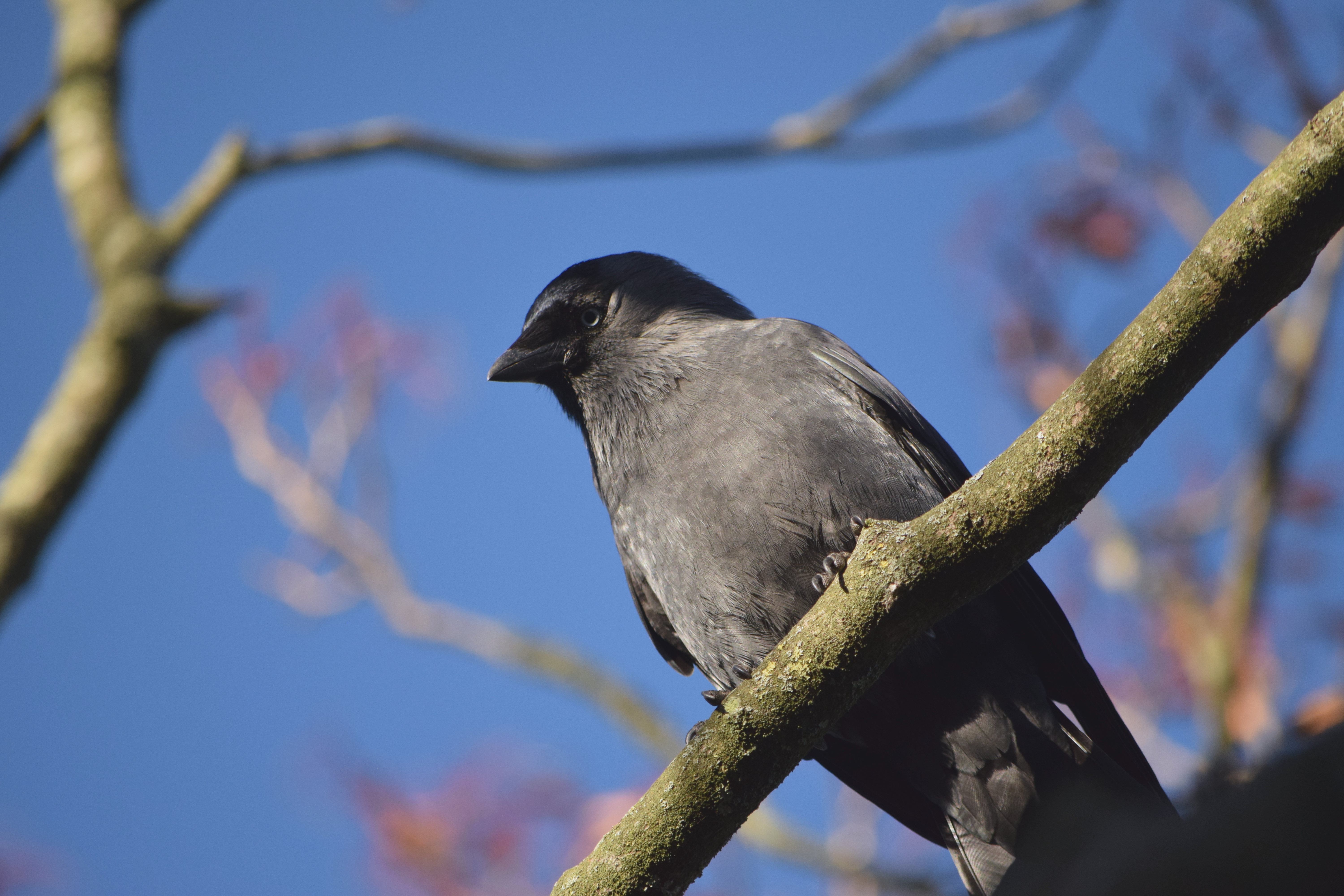
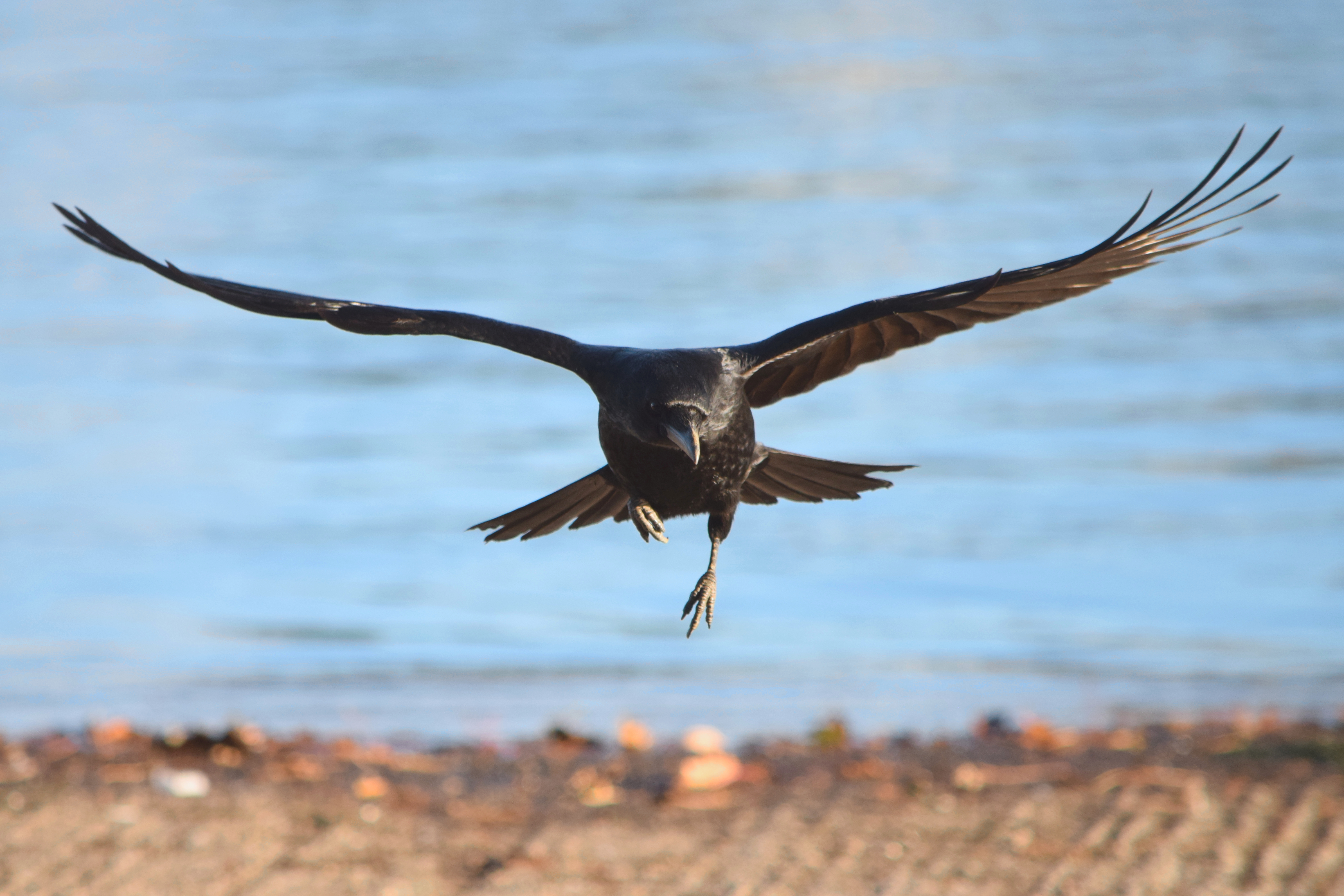
Left: curious jackdaw. Right: landing crow (Yeadon, 25/10/25).
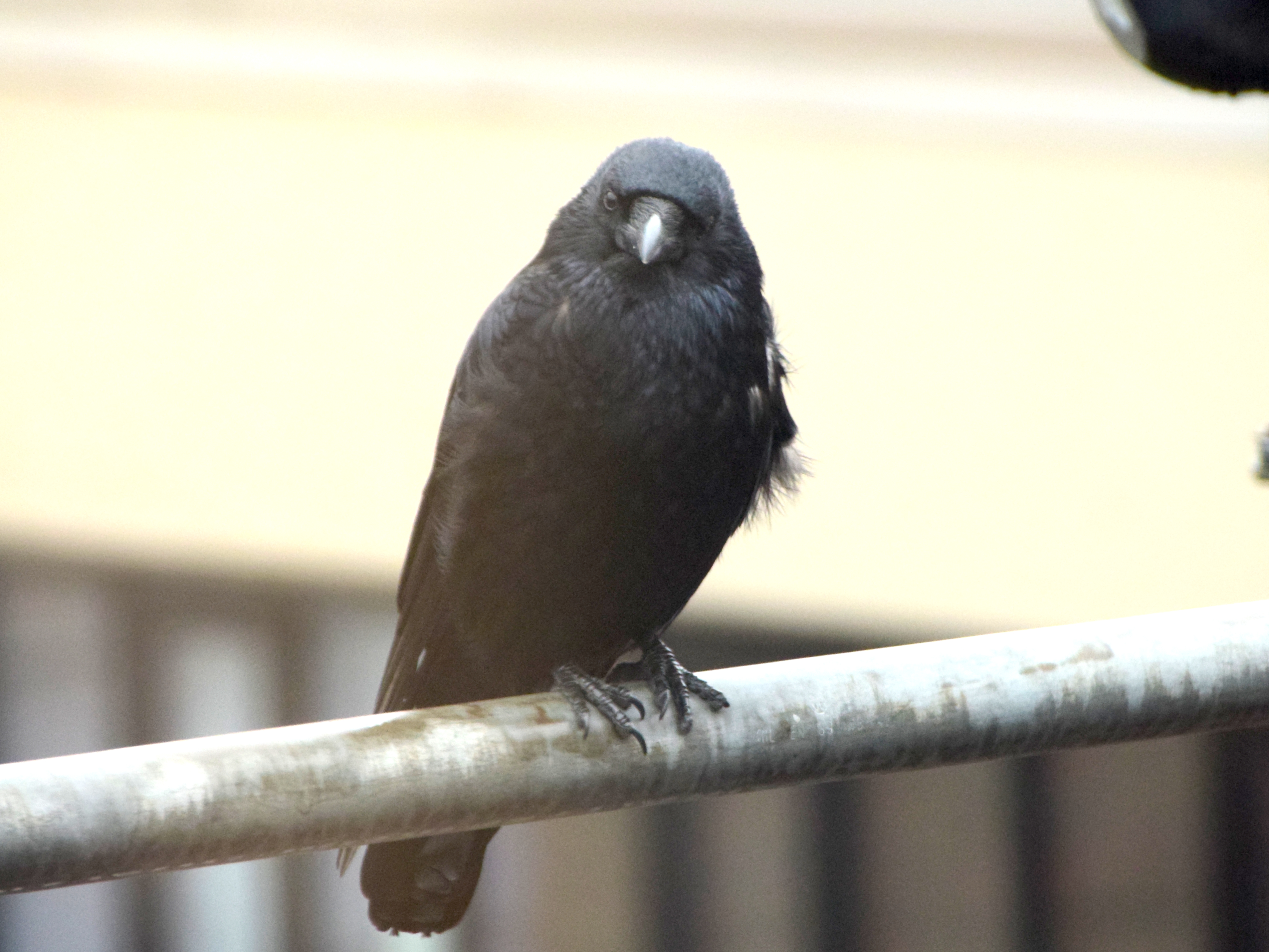
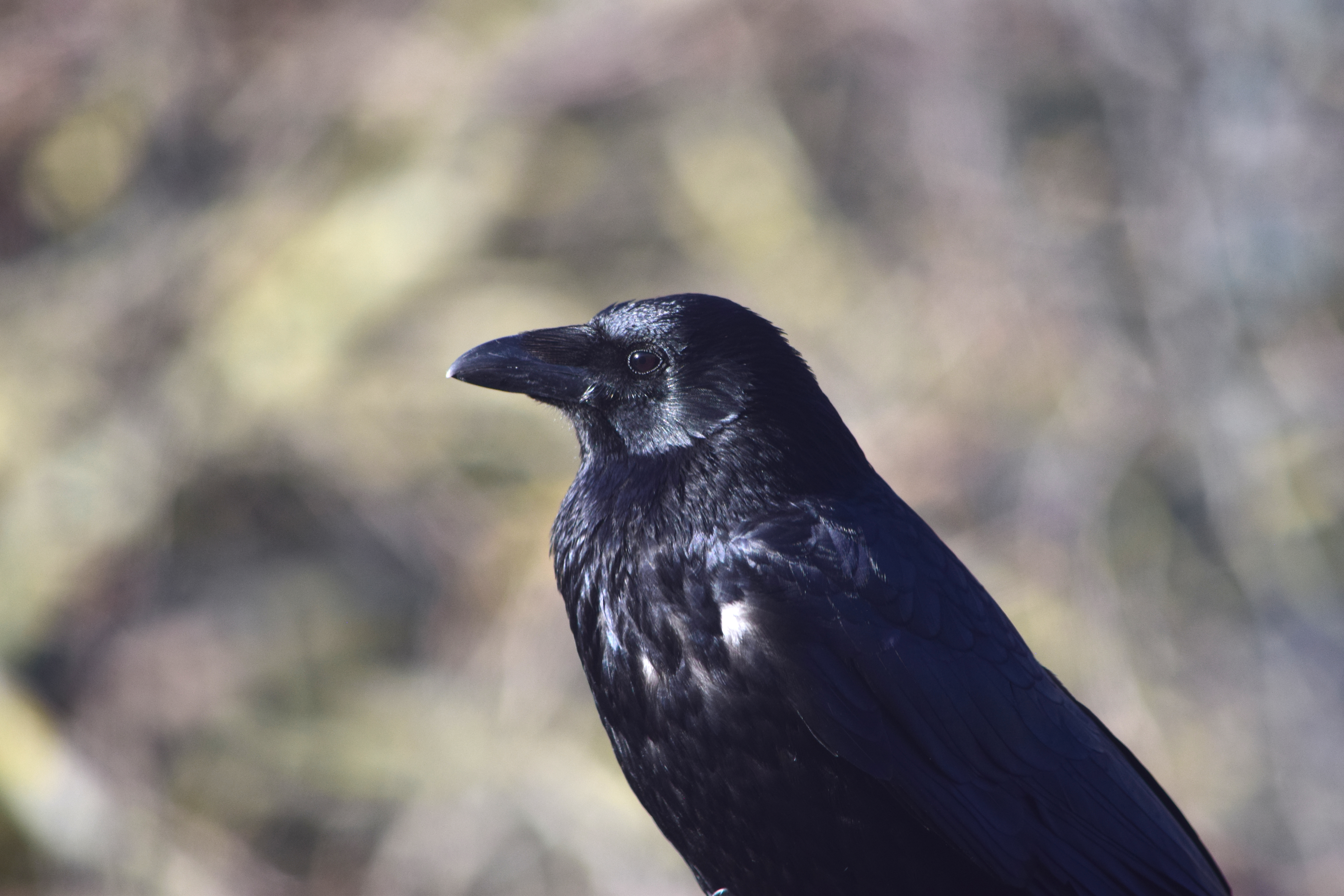
Left: Fluffy on a cold and rainy day (Leeds, 10/02/26). Right: Fluffy on a warm and sunny day (Leeds, 17/03/26).